

The Problem
Four different spectrums. Four different business models. One shared challenge: data integrity during transformation. I’ve seen this across enterprise consulting engagements, PE-backed portfolio companies, pre-IPO infrastructure businesses, and high-growth SaaS organizations. The platforms differ. The data governance risk is identical. And in every case, the CFO must own it.
Not because CFOs are data engineers. But because financial truth is at stake. When data integrity breaks during transformation, it damages more than systems. It damages valuations, audit trails, investor confidence, and board credibility. And increasingly, it creates attack surfaces that cybersecurity teams alone cannot close.
Here’s how I think about it.
The Structural Vulnerabilities
Modern data transformation follows a pattern: ingest raw data, transform it, validate it, publish it for reporting. This works well in steady state. But transformation itself creates chaos. And chaos is where bad things happen – both operationally and from a security standpoint. The risks are structural, not accidental.
Data lineage becomes murky. You can’t always trace a number in your final report back to its original source. If that source was corrupted – whether through process failure or malicious interference – your reporting is corrupted. And you may not know it for months.
Control gaps expand. Traditional financial controls expect stable systems. During migration, systems are in flux. Reconciliations break. Audit trails disconnect. Approvals get skipped to ‘keep things moving.’ These aren’t failures – they’re built into how migration projects operate.
Cyber events exploit transitions. Attackers know migrations are chaotic. Security focus narrows to ‘get it done.’ Monitoring weakens. Access controls loosen. Privileged credentials proliferate across temporary environments. Data moves between systems in ways that bypass normal security perimeters. These aren’t oversights – they’re structural vulnerabilities that migration creates. And sophisticated threat actors actively target these windows.
Bad data reaches reporting. The worst case isn’t a system crash. It’s bad data that looks clean – whether corrupted by process failure, unauthorized access, or deliberate manipulation. Numbers that pass validation but are fundamentally wrong. These corrupt reports before anyone notices. Discovery after publication is far more expensive than prevention.
(Specifics are masked due to confidentiality. But I’ve managed each of these risks across multiple transformations.)
Where AI Changes the Game
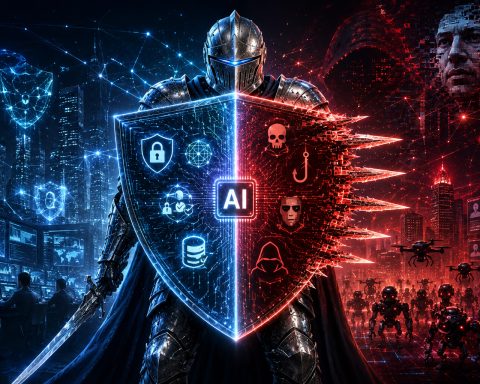
AI doesn’t replace controls. It amplifies them. And during transformation chaos – when both operational and security risks peak simultaneously – amplified controls are essential. Here’s what shifts:
Real-Time Anomaly Detection
Traditional controls are periodic. Daily reconciliations. Weekly validations. Monthly audits. During transformation, periodic isn’t fast enough. Bad data travels fast – and so do threat actors.
AI-driven anomaly detection works in real time. It watches data as it flows through transformation layers. It catches sudden spikes in transaction volumes, numbers that fall outside expected ranges, patterns that break historical norms, data that contradicts validation rules, and access patterns that suggest unauthorized activity. The same AI engine that protects financial accuracy also serves as an early warning system for cybersecurity events embedded in data flows.
Catching these in minutes instead of days matters. It’s the difference between preventing corruption and discovering it after it reaches reporting.
Data Lineage Validation
“Where did this number come from?” should be a simple question. During transformation, it often isn’t. Teams lose track of what’s moved. Source systems get decommissioned. Documentation lags reality.
AI can map data lineage automatically and permanently. It knows what source system a data record came from, what transformations applied, what validations occurred before publishing, and what human approvals signed off. This lineage is immutable. Auditable. Provable. When a number reaches the board report, the entire chain of custody is visible.
That’s control. That’s credibility. And from a cybersecurity perspective, it’s forensic readiness – the ability to reconstruct exactly what happened if a breach or data manipulation event occurs.
Automated Reconciliation
“Does source match intermediate? Does intermediate match final? Does final match the ledger?” In steady state, reconciliation is routine. During transformation, it’s chaotic. Manual reconciliation across multiple transformation stages takes days. When something’s wrong, you’re guessing where.
AI automates this. Sample-based reconciliation runs hourly. 100% reconciliation on critical subsets (high-value transactions, sensitive entities). Variance reports pinpoint where data diverges. Root cause analysis suggests what rule failed.
You shift from ‘we hope reconciliation passes’ to ‘we know why it didn’t.’ That’s a massive difference.
Audit Trail Integrity
Who touched what, when, why, and from where? During transformation, this gets messy. Automated processes run outside normal audit windows. Manual interventions happen to unstick jammed loads. Change management procedures bend or break.
AI-driven audit trails capture all of it. Every data modification is logged with source, timestamp, user, and justification. Approval workflows are immutable. Anomalous access patterns are flagged immediately. Forensic reconstruction is possible months later if needed.
This matters for external auditors. It matters for cybersecurity incident response. And most importantly, if something goes wrong, you need to answer: ‘Here’s exactly what happened, why, and who approved it.’ An immutable audit trail lets you do that with evidence – whether the cause was operational error or a targeted breach.
The CFO’s Strategic Role
This isn’t technical infrastructure work. This is strategy. And it requires CFO-level leadership. You can’t delegate it. You can’t assume it’s built in.
Own the Governance
You need a data control framework tailored to your transformation context. Define roles clearly—who is responsible for data quality at each stage, who approves transformations, and who validates data before publication. Establish explicit escalation paths so that when anomaly detection flags an issue—whether it’s a data quality problem or a potential security event—it’s clear who investigates and what must happen before reporting resumes. Finally, set meaningful success metrics: having zero anomalies isn’t realistic, but zero unexplained anomalies are achievable.
Apply the DDBPE Framework
If you’re running or advising transformation, think in stages:
Define the design early—clarify requirements, establish non-negotiables, and bake in security controls. Deliver value early by putting monitoring in place before production migration. Create safety nets by running parallel systems and reconciling them daily. Stay actively protective with continued monitoring for months after cutover, when operational and security risks compound. Finally, make it sustainable by embedding governance as a permanent standard, not a temporary measure.
This approach isn’t slower. It’s smarter. You catch problems early, when they’re cheaper to fix.
Communicate to Your Board
Boards care about three things: speed, risk, and cost. Frame your data governance approach in those terms.
Speed – AI-driven controls let us transform faster because we don’t wait for manual reconciliation delays.
Risk – We’ve identified the specific ways data can be corrupted during this transformation – both through operational failure and cybersecurity exposure. Here’s how we prevent each one.
Cost – A single data restatement costs millions. A single breach during transformation costs more. Our control investment is a fraction of that. It’s insurance.
Boards respect CFOs who own risk. Not CFOs who pass it downstream.
Four Contexts, One Principle
The Enterprise Consulting Context
If you’re advising clients on transformation: Your recommendations are only as good as their execution. Data governance failures become your client’s problem – and reflect on you. A consultant or partner who doesn’t ask ‘How will we protect data integrity during this transformation?’ is selling risk. The ones who do ask that question are selling insurance. Your client’s board will remember who flagged the data risks early.
The PE-Backed Portfolio Context
If you’re operating inside a PE-backed portfolio: The pressure is different but equally intense. PE sponsors demand rapid value creation – consolidation of acquisitions, integration of platforms, standardization across portfolio companies, and clean financials that support the next raise or exit. Data integrity is the foundation of all of it.
During M&A integration, multiple data environments collide. Chart of accounts don’t align. ERPs don’t talk to each other. Reporting timelines clash. And the PE board expects consolidated numbers on schedule regardless. Every one of those integration points is a data governance risk – and a cybersecurity exposure. Legacy systems from acquired companies carry unknown vulnerabilities. Access controls from the acquired entity may not meet the standards of the acquiring platform.
The CFO in a PE-backed environment who builds AI-driven governance into the integration playbook from day one doesn’t just protect the numbers. They accelerate the sponsor’s value creation timeline. Clean data means faster reporting. Faster reporting means faster decisions. Faster decisions mean faster returns. PE sponsors notice CFOs who deliver that.
The Pre-IPO Context
If you’re building toward a public exit: IPO readiness auditors will dig deep into data governance. They’ll ask how you managed data integrity during scaling. They’ll want to see evidence. Weak governance during the scaling phase becomes a valuation discount or a delaying factor in your exit. The CFO who owns data integrity from day one of transformation – and can prove it – is the CFO whose company exits cleanly. Without restatements. Without audit delays. Without investor confidence questions.
The SaaS Context
If you’re scaling a SaaS organization: Your data is your competitive moat. It’s also your financial truth. You can’t afford corruption in either. Product data drives valuation metrics (customer acquisition cost, lifetime value, retention rates, growth rates). Financial data drives revenue recognition and cash flow. During transformation, both are at risk simultaneously. The SaaS CFO who can say ‘I’ve protected our data through transformation without slowing our growth’ is differentiated. That’s a rare skill set. Investors notice.
The Real Competitive Advantage
Most organizations finish a transformation and breathe a sigh of relief. ‘We survived.’ The best ones finish and say: ‘We learned something. We understand our data better now. Our controls are stronger. We’re more resilient.’
AI-driven data governance during transformation isn’t only about avoiding issues—it’s about creating institutional knowledge. It reveals what your data truly looks like (not what you assumed), where your processes are vulnerable, which controls genuinely matter (and which are just performative), and how to operate disciplined, durable data governance as a core capability.
That’s your competitive advantage. Not just surviving transformation. But understanding your data deeply enough to protect it. And use it strategically.
Data integrity during transformation is not a one-time fix. It’s the beginning of operating sophistication. Organizations that invest in data governance during transformation emerge with a capability that compounds over time. Each subsequent transformation becomes easier. Each data product becomes more trustworthy. Each stakeholder – from auditors to investors to PE sponsors to employees – develops deeper confidence in the numbers. This is how market leaders build moats.
The question isn’t whether you’ll transform. The question is: Will you do it safely? Will you own the governance? Will you use AI to make that governance invisible but relentless?
That’s what separates CFOs who manage risk from CFOs who get managed by it.