


At the World Economic Forum in Davos this week, Google DeepMind CEO Demis Hassabis offered a blunt assessment of OpenAI’s decision to put ads in ChatGPT: “I’m a little bit surprised they’ve moved so early into that.”
But it was his follow-up question that should make every business owner think: “You want to have trust in your assistant, so how does that work?”
This is not a competitive swipe from a rival AI company. Hassabis is identifying something fundamental about how AI assistants work, and what happens when commercial interests enter the equation.
What OpenAI Actually Announced
On 16 January 2026, OpenAI confirmed it will begin showing advertisements in ChatGPT. CFO Sarah Friar defended the timeline at Davos, responding to Hassabis: “Early is a weird word when you’re $5 billion in the red.”
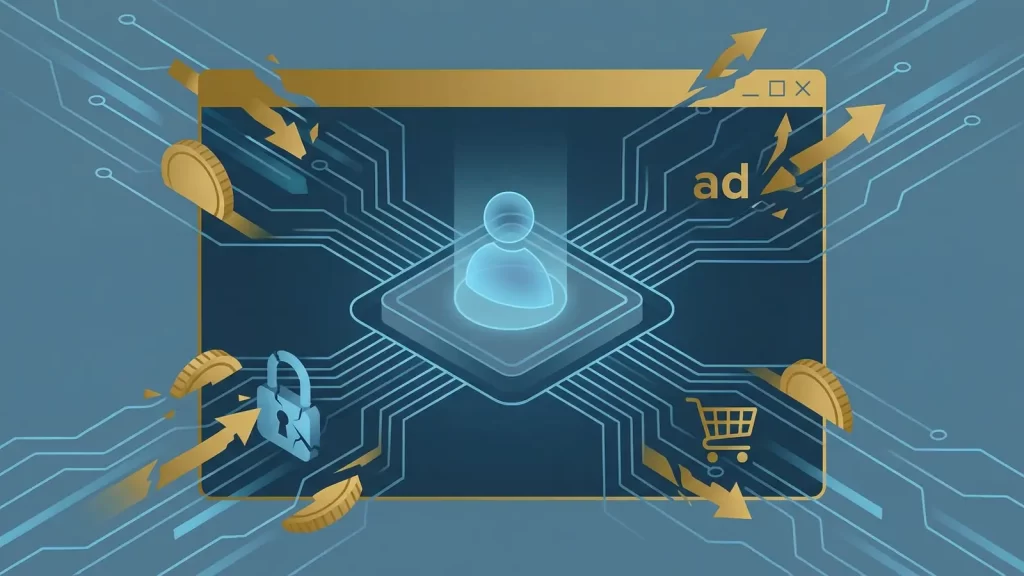
The financial logic is simple. OpenAI burns through billions running inference on millions of queries. Advertising offers a revenue stream that does not require users to pay subscription fees. Early reports suggest ChatGPT ads could cost around $60 CPM, putting them among the most expensive digital ad placements available. Those ads went live on 9 February, and the organic answer slot above them is already the most contested real estate in AI search.
But Friar’s answer sidesteps Hassabis’s actual concern. The question was not about timing. It was about trust.

The fundamental tension: can an AI assistant serve both user interests and advertiser interests simultaneously?
The Trust Problem Hassabis Identified
When you ask a human assistant for a restaurant recommendation, you expect them to suggest somewhere they actually think you would enjoy. If they recommend somewhere because the restaurant paid them to, that is a different relationship entirely.
The same dynamic applies to AI assistants, but at scale, and in ways users may not detect.
“In the realm of assistants… there is a question about how ads fit into that model.”
– Demis Hassabis, Google DeepMind CEO, at Davos 2026
Consider what happens when someone asks ChatGPT for product recommendations, service providers, or business advice. With over 800 million people now using ChatGPT, these queries happen at enormous scale. Currently, ChatGPT draws on its training data and reasoning to provide what it calculates to be the most helpful response. Once ads enter the picture, there is an inherent tension: what is best for the user versus what is best for the advertiser.
Why Disclosure Is Not Enough
OpenAI will presumably label advertisements as such. But research consistently shows that disclosure does not neutralise the influence of advertising. Users still click on ads. They still absorb the messaging. And crucially, the line between “organic” AI recommendations and sponsored content becomes harder to draw.
If ChatGPT recommends three accountancy firms and one of them paid to be included, how do users evaluate that recommendation? Even if the paid placement is labelled, does the presence of advertising change which “organic” recommendations appear?
These are not hypothetical concerns. They are the same issues that complicated search engine results over the past two decades, except AI assistants present them in a more conversational, seemingly trustworthy format.
What This Means for Businesses
For businesses thinking about AI visibility, the ChatGPT advertising model creates a two-tier system:
| Approach | How It Works | Trust Implications |
|---|---|---|
| Organic AI Visibility | AI recommends your business based on real information and relevance | Higher trust: user perceives recommendation as merit-based |
| Paid AI Placement | Your business appears because you paid to be shown | Lower trust: user knows (or suspects) commercial motivation |
This is not to say paid placement is worthless. Traditional search advertising remains effective. But the conversational nature of AI assistants creates different expectations. When someone asks ChatGPT “Who should I hire for web design in Kettering?”, they are asking for a recommendation, not a list of advertisers. The shift from ranking to being chosen by AI makes organic presence more valuable than ever.
Google’s Different Approach
Hassabis’s comments are notable partly because Google faces the same pressures. Google’s core business is advertising. Yet DeepMind’s leader is publicly questioning whether advertising belongs in AI assistants at all.
Google has been cautious about how it integrates AI into Search. The AI Overviews feature (which provides AI-generated summaries at the top of search results) has faced criticism for potentially reducing traffic to source websites. But Google has not, so far, inserted traditional advertising into these AI responses.
This may change. But Hassabis’s Davos comments suggest at least some at Google recognise the fundamental tension between assistant trust and advertising revenue.
The Bigger Picture
AI assistants are becoming how people find information, make decisions, and choose services. This shift represents a major shift in how businesses reach customers. Understanding your real AI visibility (not the misleading scores from tools that most AI visibility checkers fabricate) is now essential.
The advertising model that dominated web search for two decades does not map cleanly onto AI assistants. Search results were always a list of options. Users understood they were choosing from possibilities, not receiving a personal recommendation.
AI assistants present information differently. They synthesise, recommend, and advise. They speak in first person. They build conversational relationships. Inserting advertising into this dynamic changes the nature of that relationship.
Hassabis is right to ask how trust works when your assistant is also showing you ads. Anthropic clearly thinks so too: the company dropped $8 million on a Super Bowl ad making trust the centrepiece of its pitch against ChatGPT. It is a question every business, and every user, should be considering.