



Introduction
Transaction Validation Testing, Transaction Process Validation, Regulatory Reporting Testing, Regulatory Transaction Testing, Operations Quality Control, and Operations Risk Testing are all different names for the same process that occurs across various banks worldwide. For the purposes of this paper, we will refer to it as QATT, or Quality Assurance Transaction Testing, as a representative term for the numerous titles used in practice.
While the terminology may differ, the challenges remain consistent. Regardless of the name, all of these processes address a fundamental issue that banks must confront: ensuring the quality and validation of the data used to capture customer information, monitor activities such as fund movements, lending, and trading. Ultimately, this information is used in regulatory filings and other financial disclosures.
The accuracy and validation of this data are governed by a multitude of regulations worldwide, including BCBS 239 Principle 6, AML/KYC regulations from FATF, FinCen, the EBA, the Bank Secrecy Act, the EU’s 4th and 5th AML Directives, FATF 11, SOX 404, Gramm-Leach-Bliley, EBA/GL/2019/04, Fed SR 20-24, the Bank of England Operational Resilience Framework, and ISO 20022, among others.
Given the extensive regulations surrounding the QATT process, the volume of data expected by regulators, and the scrutiny applied to that data, the time is ripe for banks to reimagine and thoroughly evaluate opportunities for process improvement.
When consolidating data for regulatory reporting and potential audit or regulatory scrutiny, banks must consider several key factors:
- What is our data quality assessment process?
- Has our process been reimagined since we implemented the requirements of BCBS 239?
- What is the governance over that process?
- Are we producing accurate information?
- Is this process optimized for efficiency and consistency across the entire bank?
- Is it predominantly manual?
- What tools do we utilize to validate data?
- Are we actively exploring the integration of NLP, data science, and potentially AI in this process?
The answers to these critical questions will vary from one bank to another and, in many instances, differ across various business lines or products within the same institution.
What is QATT?
Quality Assurance Transaction Testing (QATT) is a systematic methodology designed to validate and verify the accuracy, reliability, and compliance of data and financial transactions executed by banks and financial institutions. This process entails comprehensive testing of transaction systems, processes, and data to ensure alignment with regulatory and operational standards, as well as risk management policies.
QATT is particularly crucial for preserving the integrity of high-volume and complex transactions managed by banks, especially those banks classified as Global Systemically Important Banks (G-SIBs).
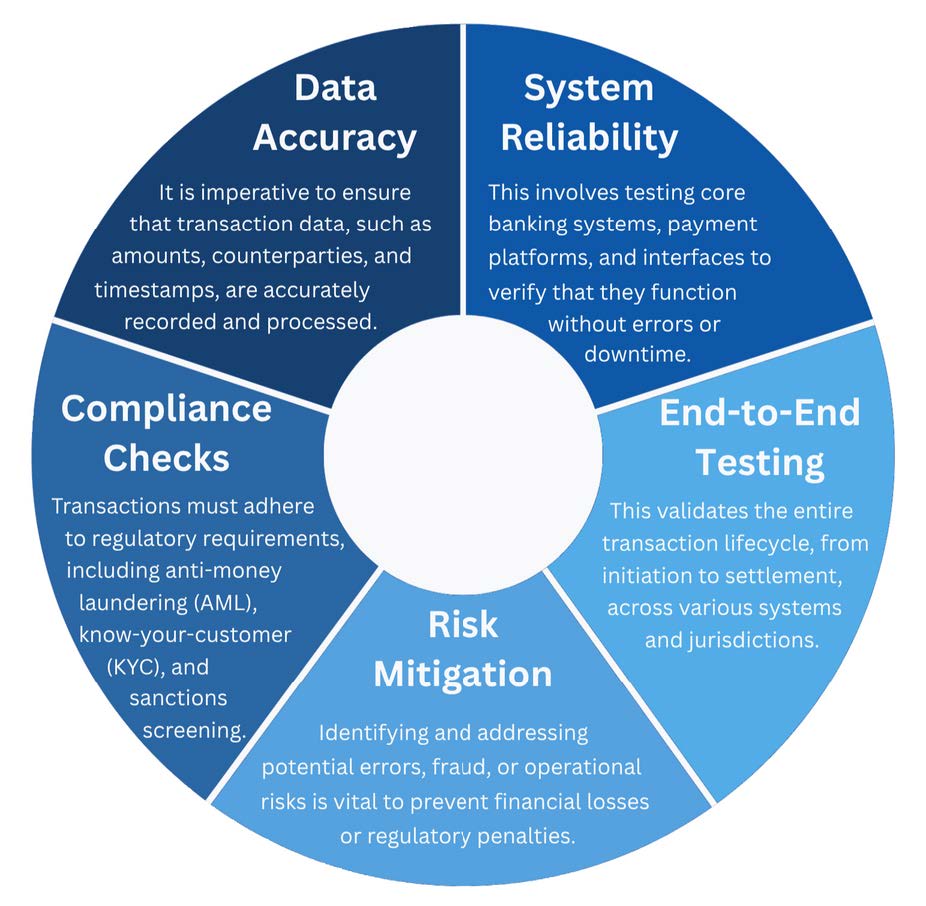
The QATT process consists of several essential components that are key to its effectiveness and efficiency:
Why QATT is Crucial for Banks and G-SIBs
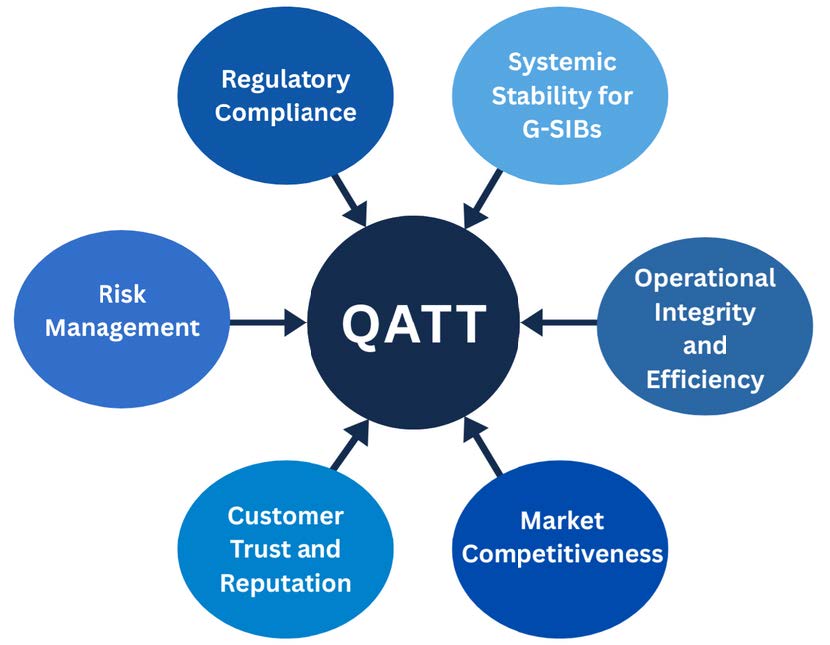
QATT plays a vital role for banks and Global Systemically Important Banks (G-SIBs) by helping maintain financial stability, ensuring regulatory compliance, and protecting customer trust.
Here are the key reasons why QATT is essential:
Regulatory Compliance
- Global Standards: G-SIBs, identified by the Financial Stability Board (FSB) and the Basel Committee on Banking Supervision (BCBS), must adhere to stringent requirements outlined in frameworks like Basel III, Dodd-Frank, and the EU’s Capital Requirements Regulation (CRR). QATT ensures that transaction systems comply with these regulations, particularly in liquidity reporting, capital adequacy, and systemic risk metrics.
- Anti-Money Laundering (AML) and Know Your Customer (KYC): QATT verifies that transaction monitoring systems are effective at detecting suspicious activities, ensuring compliance with AML, counter-terrorism financing (CTF), and sanctions regulations enforced by organizations such as the Financial Action Task Force (FATF) and the Office of Foreign Assets Control (OFAC).
- Cross-Border Compliance: Operating across multiple jurisdictions, G-SIBs face diverse regulatory requirements. QATT ensures that transaction systems can meet these varying compliance needs, including adherence to the EU’s Single Euro Payments Area (SEPA) and SWIFT messaging standards.

Systemic Stability for G-SIBs
- Systemic Risk Mitigation: Given the interconnected nature of G-SIBs, transaction errors or system failures could trigger widespread market disruptions. QATT guarantees robust transaction processing to prevent cascading failures, aligning with Basel III’s focus on minimizing systemic risk.
- Resolution Planning: QATT supports G-SIBs in developing “living wills” by ensuring that transaction systems remain operational during distress scenarios, thereby maintaining liquidity and operational continuity throughout resolution processes.
- Systemic Importance Score (SIS): Accurate transaction data, validated through QATT, is vital for calculating SIS metrics, which assess a G-SIB’s systemic importance and the corresponding capital surcharges.
Operational Integrity and Efficiency
- Error Prevention: QATT identifies discrepancies in transaction data, such as incorrect payment routing or duplicate transactions, before they can lead to financial losses or reputational damage.
- System Robustness: By stress-testing transaction systems, QATT ensures they can handle high volumes, complex instruments (like derivatives and structured products), and peak market conditions—an essential capability for G-SIBs managing trillions in daily transactions.
- Automation and Cost Savings: Automated QATT tools help reduce manual auditing costs, enabling banks to process transactions efficiently while maintaining accuracy.
Customer Trust and Reputation
- Transaction Accuracy: Errors in transactions, such as incorrect fund transfers or delayed settlements, can erode customer confidence. QATT ensures seamless and accurate transaction processing, thereby maintaining trust among retail, corporate, and institutional clients.
- Fraud Prevention: QATT incorporates testing for fraud detection systems, protecting customers from unauthorized transactions and shielding banks from potential liabilities.
Market Competitiveness
- Digital Transformation: As banks increasingly adopt fintech solutions, such as blockchain-based payments and real-time gross settlement systems (RTGS), QATT ensures these technologies integrate reliably with existing infrastructures, fostering innovation without compromising stability.
- Cross-Border Efficiency: For G-SIBs and global banks, QATT validates systems that manage multi-currency and cross-border transactions, ensuring competitiveness in the global marketplace.

Risk Management
- Operational Risk: QATT mitigates risks arising from system failures, data breaches, or human errors, which are amplified in G-SIBs due to their scale and complexity.
- Liquidity and Settlement Risk: By testing settlement processes, QATT ensures timely transaction completion, thereby reducing liquidity risks and counterparty exposure.
- Cybersecurity: QATT includes assessments for vulnerabilities in transaction systems, protecting against cyberattacks that could disrupt operations or compromise sensitive data.
Specific Importance for G-SIBs
G-SIBs face heightened scrutiny due to their critical role in the financial system:
- Global Reach: Their operations span multiple jurisdictions, requiring QATT to validate transactions across various regulatory frameworks, time zones, and currencies to ensure smooth global reporting and processing.
- Higher Capital Requirements: Under Basel III, G-SIBs must maintain additional capital buffers proportional to their systemic importance. QATT is essential for providing accurate transaction data for calculating risk-weighted assets (RWA) and capital ratios.
- Contagion Risk: A failure in a transaction involving a G-SIB could have widespread repercussions throughout the financial system. QATT’s comprehensive testing protocols help mitigate such risks, thereby promoting global financial stability.
Importance for All Banks
While G-SIBs encounter unique challenges, all banks can benefit from a robust QATT process:
- Smaller Banks: QATT empowers regional and community banks to maintain strong transaction systems, enabling them to compete effectively with larger institutions by providing reliable services.
- Emerging Markets: Financial institutions in developing regions, such as Africa and Asia, leverage QATT to implement modern payment systems and comply with international standards, fostering financial inclusion and economic growth.
- Regulatory Reporting: QATT ensures accurate data for regulatory submissions, helping banks avoid penalties for non-compliance—an essential consideration for institutions of all sizes.
The banking landscape in the U.S. and around the globe is always adapting to market and regulatory changes. With an abundance of data at their fingertips, banks are tasked with the critical challenge of ensuring that this data remains complete, accurate, and consistent. Validation processes can vary significantly among banks and may differ across various business lines, products, and geographic regions within the same bank.
Our research and experience reveal that the QATT processes can differ markedly from one institution to another
Typically, firms adopt one or more of the following approaches:
- Manual processes utilize statistical sampling and audit-like techniques to trace back to source documents, often recorded in Excel or other desktop tools and stored on shared drives.
- A hybrid approach combining manual processes, automated tools, and governance frameworks to ensure the completeness and accuracy of transaction data.
- Real-time validation methods that confirm the accuracy of trade and transaction data, frequently cross-referencing with external sources.
- Automated tools that execute predefined test cases to validate transaction data, thereby reducing manual effort and enhancing scalability.
- Leveraging AI technologies, in our experience with certain banks, we see an uptick in some banks experimenting with AI tools that identify anomalies and predict potential data issues.
- Centralized functions have been established at certain banks that have consolidated their QATT functions, often in offshore or nearshore centers, applying some of the methodologies mentioned above. Additionally, some firms assigned certain departments with data ownership and quality, whereby each department designs its own testing methodology that is aligned with the bank’s Data Quality Assurance (DQA) program and principles.
Understanding the Challenges and Risks of QATT
The QATT process is often influenced by the size, scope, and regulatory
framework that each bank must navigate. However, size and scope are not the only determining factors. Institutions built on more modern platforms and technologies, even if they are newer to the market and potentially smaller, may adopt more advanced techniques for data validation.
Moreover, all firms face the following issues:
- Complexity and Cost: Implementing QATT requires significant investment in technology, skilled personnel, and ongoing maintenance, which can present challenges for smaller banks.
- Evolving Threats: The landscape of cyber risks and regulatory changes necessitates continuous updates to QATT processes, demanding agility and adequate resources.
- Over-Reliance on Automation: Excessive dependence on automated testing tools, without sufficient human oversight, may overlook nuanced errors or emerging risks
Conclusion
QATT: A Vital Process for Regulatory Compliance, Financial Reporting, and Delivering for Customers
QATT is crucial for ensuring the accuracy, reliability, and compliance of data and financial transactions conducted by banks. For G-SIBs, QATT mitigates systemic risks, supports regulatory compliance, and maintains operational stability in complex, high-stakes environments.
For all banks, it enhances efficiency, customer trust, and competitiveness while reducing operational and regulatory risks. As financial systems become increasingly digital and interconnected, QATT’s role in safeguarding transaction integrity will only grow.
Establishing effective governance and thorough documentation for QATT is
crucial. Furthermore, the fundamental principles developed by the bank should be consistently implemented throughout all facets of the organization.
About Kingland
Kingland is a leading provider of enterprise-class software using a suite of products and teams of data and technology experts. The world’s largest stock exchanges, financial institutions, public accounting firms, and other Fortune 500 companies use Kingland Solutions for data management, risk management, regulatory compliance, & data refinement.
Our Regulatory Grade AI, NLP, and Data Solutions are designed to assist you, regardless of where your QATT process falls on the maturity spectrum. Kingland Solutions offers support by:
- Automating your processes through advanced AI, NLP, and data management.
- Ensuring regulatory compliance with our specialized Regulatory Grade Solutions.
- Mitigating risks by harnessing the power of AI and data science.
- Assessing your current state and providing tailored recommendations for future improvements.
- Eliminating inconsistencies in processes across departments, products, and businesses.
- Enhancing the quality of your data and streamlining the validation process.
Since 1992, Kingland has helped data-intensive, highly-regulated clients discover new ways to securely grow their business and protect their reputation. For more information about Kingland, please visit www.kingland.com.